 yasinkarabacak
The Megale Ecclesia (Great Church), believed to be the first church structure at the location of Hagia Sophia, was a product of the reign of Emperor Constantius II. Due to the friction between Archbishop Ioannes Chrysostomos and Aelia Eudoxia, the young wife of Emperor Arcadius, the life of this first structure was cut short.
(Geçmişte Ayasofya’nın bulunduğu alana yapıldığı bilinen ilk kilise yapısı Megale Ekklesia (Büyük Kilise), İmparator II. Konstantius döneminde inşa ettirilmiştir. İmparator Arkadius döneminde Başpiskopos İoannes Hrisostomos ve imparatorun genç karısı Aelia Eudoksia arasında yaşanan çatışmalardan dolayı bu yapının ömrü pek uzun olmamıştır.)
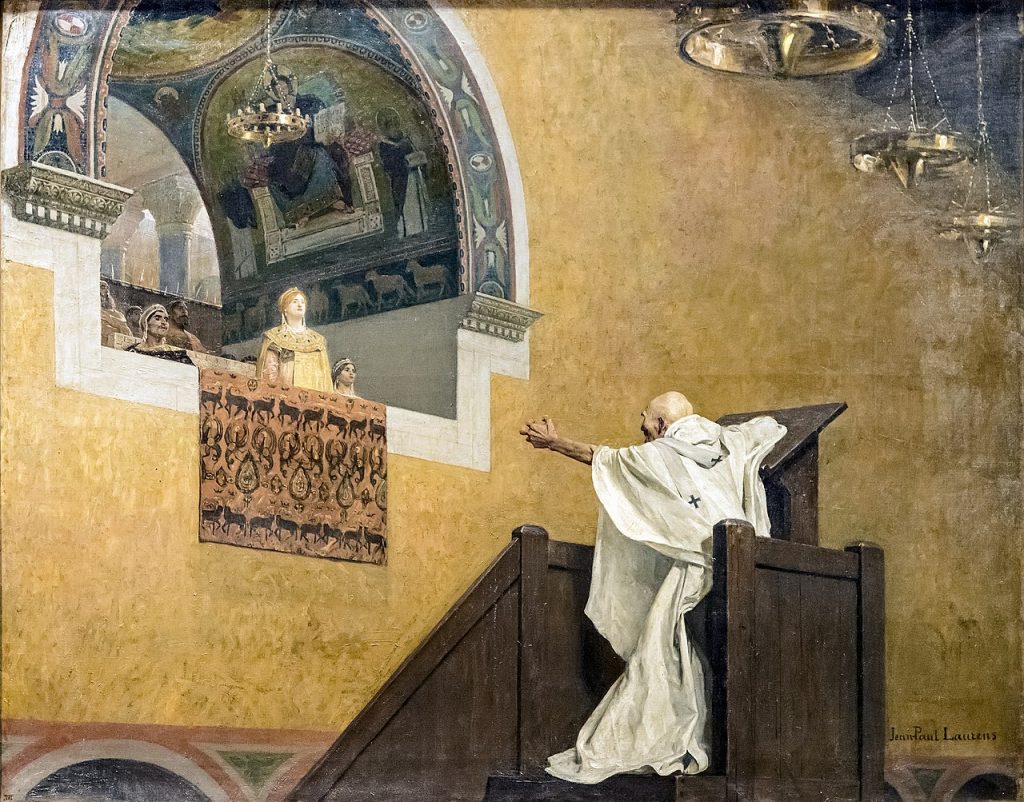
by Jean-Paul Laurens, 19th century
A column erected near the church in 403, dedicated to the Empress Eudoxia, marked the beginning of the end for Megale Ecclesia. The column comprised a silver statue of the Empress, who was depicted wearing a long dress. Due to the festivities that took place after the inauguration of the column, the structure was heavily criticised by the patriarch. In the course of a religious ceremony in the church, the archbishop, who because of his rhetorical flair was known as “Chrysostomos” (meaning “Golden Mouth”) went so far as to openly condemn the festivities for being paganistic in character. He considered the public games that took place around the column an insult to the church, and he condemned those who attended them. The Empress took offence at the archbishop’s stance and made moves to have the Holy Synod convene. On hearing of this, the archbishop made the following comment, alluding to the Biblical story of Herodias and John the Baptist: “Again Herodias raves; again she is troubled; she dances again; and again desires to receive John’s head in a charger.” Understandably, these words further incensed the empress. The Holy Synod did convene and a decision was made against Chrysostomos, which would later lead to him being exiled by the emperor. During the mass uprising that broke out after Chrysostomos’ exile had ended, the first church was set on fire (20 June, 404) and became unusable.
(403 yılında İmparatoriçe Eudoksia adına kilisenin yakınına dikilen bir sütun Megale Ekklesia için sonun başlangıcı olmuştur. Üzerinde imparatoriçenin uzun bir elbiseyle tasvir edilmiş gümüş heykeli bulunan sütun, açılışını takiben gerçekleşen şölen sebebiyle patriğin yoğun eleştirilerine maruz kalmıştır. Güçlü hitabetinden dolayı “Altın Ağızlı” anlamına gelen “Hrisostomos” unvanıyla anılan başpiskopos, yapılan şölenin karakterini paganlık ile itham etmiş ve kilisede gerçekleşen bir ayin sırasında bunu açık bir dille kınamıştır. Sütun etrafında gerçekleşen halka açık oyunları kiliseye karşı bir hakaret olarak değerlendirmiş, katılanları hor görmüştür. Hatta bu tavrına sinirlenen imparatoriçenin kendisine karşı bir Kutsal Sinod (Ruhanî Meclis) toplama çabasını duyunca, İncil’deki Hirodiya ve Hz. Yahya hikâyesine atıfta bulunarak şunları söylemiştir: “Hirodiya yine çıldırdı, yine sıkıntılı, yine dans ediyor ve bunun bedeli olarak Yahya’nın başını almayı yine arzuluyor.” Bu sözler imparatoriçeyi daha da kızdırmıştır. Sonrasında toplanan Kutsal Sinod’da Hrisostomos’un aleyhine bir karar çıkmıştır ve bu durum ileride imparator tarafından sürgüne yollanmasına sebebiyet vermiştir. Sürgünün akabinde meydana gelen halk ayaklanması sırasında, 20 Haziran 404 tarihinde birinci kilise yakılmış, kullanılamayacak hale gelmiştir.)
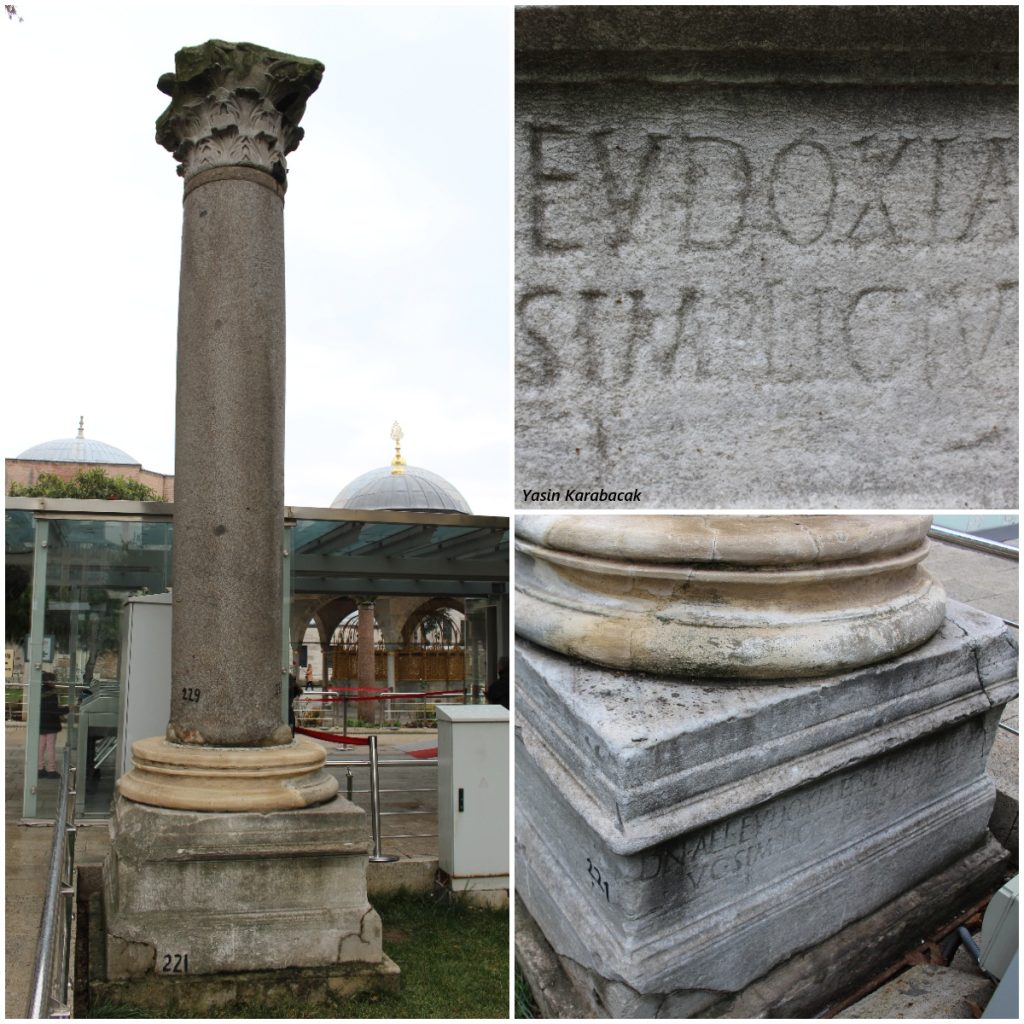
The base of the Column of Eudoxia (Eudoksia Sütunu’nun kaidesi)
We know of the existence of the column thanks to a considerable number of historical sources that refer to it, including the writings of the famous 5th century historians Socrates of Constantinople and Sozomenos. The base of the column was found in 1847 three meters below ground level to the south of Hagia Sophia. This was during the digging of the foundations of the Darülfünun building, which eventually burned down in 1933. It is not certain whether the find-spot of the base was its original location. A widespread belief, though, is that it was originally located in the north-west corner of the ceremonial square called Augustaion, known today as Hagia Sophia Square, in front of the Senate Building. The column base was initially removed from its find-spot and transferred to the vicinity of Hagia Irene. Later, it was transported to the Istanbul Archaeological Museum and then on to Hagia Sophia in 1941. The base of the Eudoxia column is located behind the electrical substation just to the left of the old museum entrance turnstiles. It bears the inventory number 221.
(Sütundan aralarında 5. yüzyılın ünlü tarihçileri Konstantinopolisli Socrates ve Sozomenos’un da bulunduğu birçok tarihi kaynakta bahsedildiği için varlığından haberdar olmaktayız. 1847 yılında, 1933’te yanarak tarihin tozlu sayfalarına karışacak olan eski Darülfünûn binasının temel kazısı sırasında, Ayasofya’nın güneyinde, yer seviyesinin 3 metre altında sütunun kaidesi bulunmuştur. Kazı sırasında kaidenin bulunduğu yerin tam olarak orijinal yeri olup olmadığı bilinmese de bu yerin bugün Ayasofya Meydanı olarak bilinen Augustaion adlı tören meydanının kuzeybatı köşesi, Senato Binası’nın önü olabileceği düşünülmektedir. Sütun kaidesi ilk olarak bulunduğu alandan alınarak Aya İrini yakınlarına konulmuştur. Daha sonra İstanbul Arkeoloji Müzeleri’ne taşınmış, 1941 yılında ise Ayasofya’ya getirilmiştir. Eudoksia Sütunu’nun kaidesi, eski müze giriş turnikelerinin hemen solundaki elektrik trafosunun arkasında bulunur ve üzerinde 221 envanter numarası yazılıdır.)
Careful examination of the base reveals the existence of two different inscriptions, in Latin and Greek, on the eastern and western faces respectively. The inscription on the eastern side, facing Hagia Sophia, includes a name in Latin capital letters, which is easily legible: EVDOXIAE. This inscription consists of the following two lines of Latin text meaning “To our mistress Aelia Eudoxia, for ever Augusta. Simplicius, of clarissimus rank, prefect of the city, dedicated [this].”

(Kaide dikkatli bir şekilde incelendiğinde, doğu ve batı yüzünde Latince ve Grekçe olmak üzere iki farklı kitabe görülmektedir. Ayasofya’ya bakan doğu yüzündeki kitabede Latince büyük harflerle yazılmış oldukça okunaklı bir isim bulunur. Bu isim EVDOXIAE’dir. “Efendimiz Aelia Eudoxiae’ye, her daim imparatoriçe. Yüksek dereceli şehrin valisi Simplicius ithaf etti.” anlamına gelen iki satırlık Latince kitabesinde şunlar yazmaktadır:)
The Greek inscription on the western face of the base is a little more complex, but it actually provides us with more detail about the column. It consists of the following four lines of Greek:
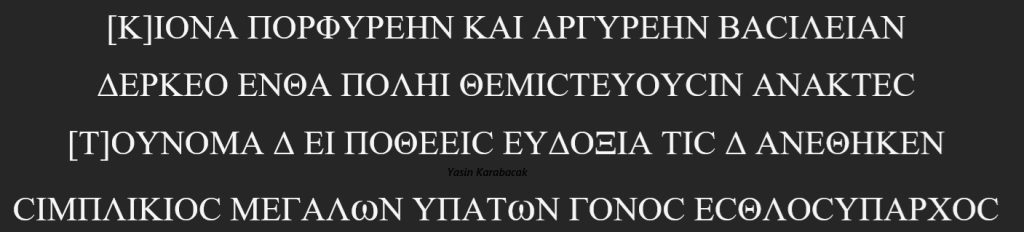
An English translation of this is: “See the porphyry column and the silver empress, in the place where the emperors give rule to the city! Of what name is she, you might ask? Eudoxia. Who set her up? Simplicius, offspring of mighty consuls, the noble prefect.”
(Kaidenin batı yüzünde yer alan Grekçe kitabe ise biraz daha karmaşık fakat bize sütun hakkında daha ayrıntılı bilgiler sunmaktadır. Dört satırlık kitabede şunlar yazmaktadır: “İmparatorların şehre hükmettiği yerdeki gümüş imparatoriçeye ve porfir sütuna bak! Eğer sen adını arzuluyorsan, Eudoksia’dır ve onu diken kim? Şehrin asil valisi, muhteşem konsüllerin neslinden olan Simplicius’tur.”)
It is estimated that the Column of Eudoxia, which sparked one of the more serious conflicts of imperial history, was eight metres tall at the time it was erected. On top of the base that was connected to the original column we now see a different column with inventory number 229 was added later on. This is evident from both the reference to a “porphyry column” in the Greek inscription and the fact that the column and its base have different inventory numbers.
(İmparatorluk tarihinde ciddi bir çatışmanın fitilini ateşleyen Eudoksia Sütunu’nun dikildiği dönemde 8 metre uzunluğunda olduğu tahmin edilmektedir. Orijinal yapıya ait kaidenin üzerinde bugün başka bir sütun bulunur. 229 envanter numaralı sütun sonradan buraya yerleştirilmiştir. Bu durum hem Grekçe kitabede bahsedilen porfir sütun ibaresinden hem de sütun ve kaide üzerinde bulunan farklı envanter numaralarından rahatlıkla anlaşılabilmektedir.)
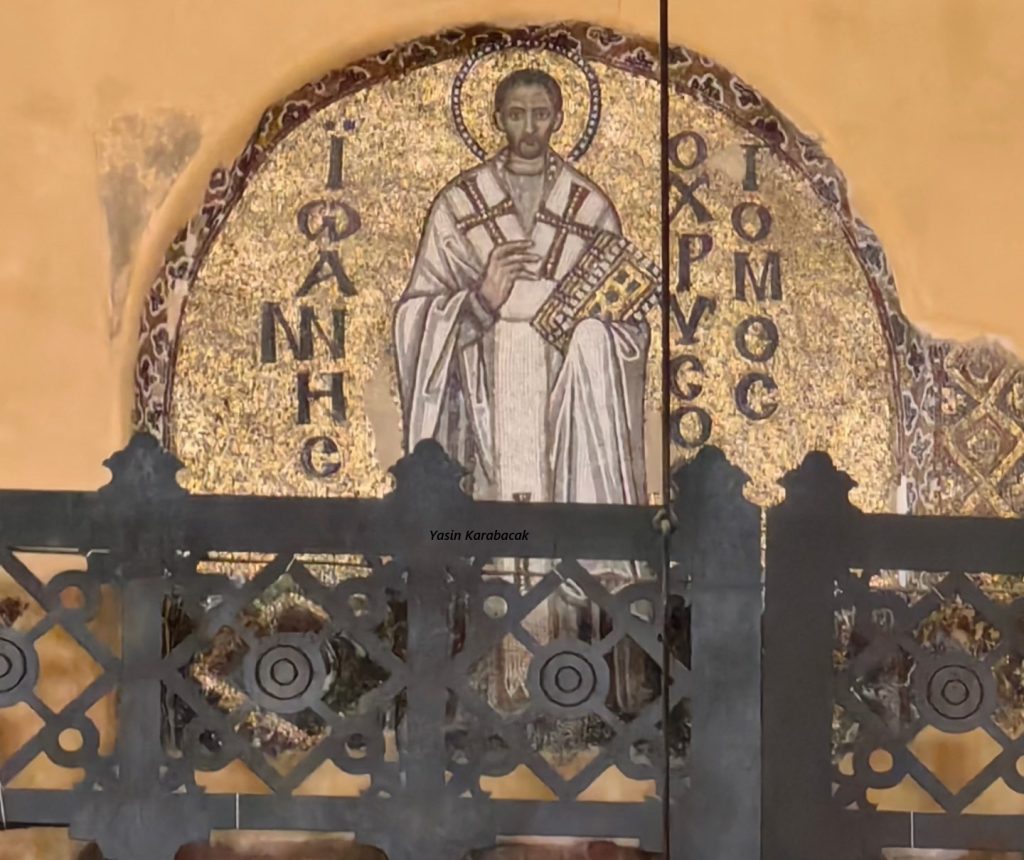
Mosaic of St. John Chrysostom (Aziz İoannes Hrisostomos Mozaiği), Hagia Sophia
Sources (Kaynaklar):
Barsanti, Claudia ve Guiglia, Alessandra. The sculptures of the Ayasofya Müzesi in Istanbul, a short guide. Ege Yayınları. İstanbul, 2010.
Eyice, Semavi. Ayasofya 1. Yapı ve Kredi Bankası Kültür Sanat. İstanbul, 1984.
Scholasticus, Socrates (Revised, with Notes, by A. C. Zenos, D.D.). The ecclesiastical history of Socrates.
Yoncacı Arslan, Pelin. Christianizing the Skyline: The appropriation of the Pagan honorary column in early Constantinople. University of California PhD Thesis. Los Angeles, 2015.
Ševčenko, Ihor. Inscription in honor of Empress Eudoxia. The Annals of Ukranian Academy of Arts and Sciences in the United States, Volume XII, Number 1-2. New York, 1972.


