 yasinkarabacak
From the time of the Oghuz khans down to the era of the Ottoman sultans, Turkish rulers have used written symbols and signs to represent themselves, and these are referred to as “tughra”s. In the early years of Ottoman rule, tughras represented the Arabic pronunciation of the name of the sultan and his father. In the course of time, the title “Shah” or “Khan” was added to this, in addition to the supplication “forever victorious”. For people who are not familiar with tughras, they may look very much like one another or just appear to be symbols; in reality, though, the tughra manifested the identity of the individual sultan. We encounter tughras in documents, inscriptions on historical structures and in many other contexts from the Ottoman period, but one of the most striking examples can be found in the outer narthex of Hagia Sophia. The tughra in question is that of Sultan Abdülmecid, who reigned from 1839 to 1861.
(Oğuz hakanlarından Osmanlı padişahlarına kadar Türk hükümdarlarını temsilen kullanılan yazılı alâmet ve işaretler tuğra adıyla anılmaktadır. Osmanlı dönemi tuğraları başlangıçta padişahın isminin babasının ismiyle beraber Arapça söylenişi olarak şekil bulmuştur. Zaman içinde buna şah ya da han sıfatı, ayrıca el-muzaffer dâimâ duası eklenmiştir. Aşina olmayanlar için birbirine çok benzeyen ya da sadece bir sembol gibi algılanan tuğralar aslında padişahın kimliğidir. Belgelerde, tarihi yapıların kitabelerinde ve Osmanlı dönemine ait birçok alanda karşımıza çıkan tuğraların en ilgi çekici örneklerinden biri Ayasofya dış nartekste bulunur. Tuğra, 1839-1861 yılları arası hüküm süren Sultan Abdülmecid’e aittir.)
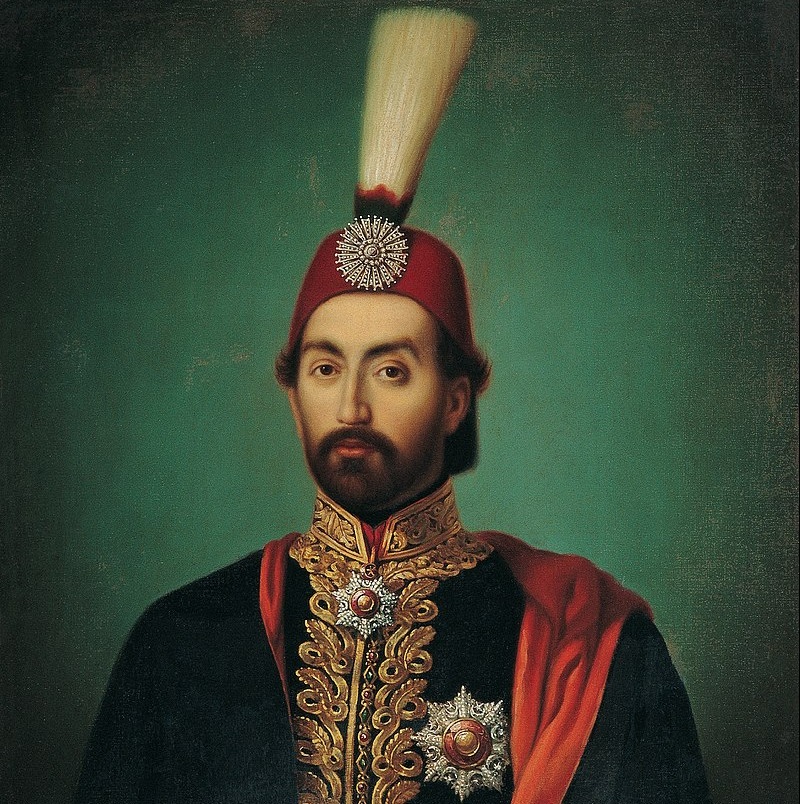
Sultan Abdülmecid
The fact that it was composed from mosaic material originating from Hagia Sophia renders it an extraordinary work, the only example of its type in fact(1). The tughra, reading “Abdülmecid Khan, son of Mahmud, forever victorious”, is an important example of a synthesis between Ottoman and Eastern Roman art in a single space. On the other hand, the tughra has not escaped the effects of the strange events that Turkey has experienced in no short measure, and it has not been easy for the tughra to be exhibited in the place we see it today. We can be extremely grateful to the late Prof. Semavi Eyice that we are able today to behold the mosaic tughra that was actually assembled by the Italian craftsman Lanzoni in the course of the repairs undertaken by the Fossati brothers between 1847 and 1849. In his 2010 article “Ayasofya’da Abdülmecid’in Mozaik Tuğrası” (Abdülmecid’s Mosaic Tughra in Hagia Sophia), Eyice writes the following:
(Tuğrayı eşsiz kılan özellik Ayasofya’nın dökülen mozaikleri ile yapılmasıdır ve bu tuğra, türünün tek örneğidir (1). “Abdülmecîd Hân bin Mahmûd el-muzaffer dâimâ” yazan tuğra, Osmanlı ve Doğu Roma sanatının aynı mekânda vücut bulduğu önemli bir sentezdir. Öte yandan son dönem tarihimizde bolca yaşadığımız garip olaylar tuğrayı da es geçmemiş ve tuğranın bugün sergilendiği yere gelmesi pek kolay olmamıştır. 1847-1849 yılları arasındaki Fossati onarımı sırasında İtalyan usta Lanzoni tarafından yapılan mozaik tuğrayı burada görebiliyorsak, rahmetli Prof. Dr. Semavi Eyice’nin bunda emeği çok ama çok fazladır. 2010 yılında yayımlanan “Ayasofya’da Abdülmecid’in Mozaik Tuğrası” adlı makalesinde konu ile ilgili olarak şunları söylemektedir:)
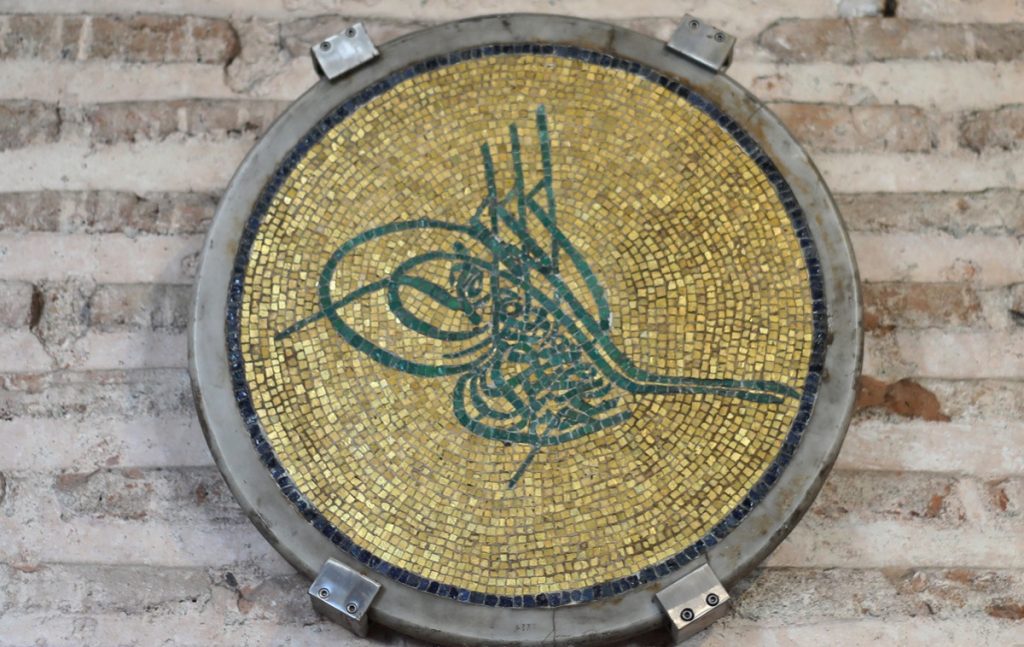
The Mosaic Tughra of Sultan Abdülmecid I (Sultan Abdülmecid’in Mozaik Tuğrası)
“We came across this item around 20 years ago. As far as I know, it is the only example in Turkish art of a sultan’s tughra made up of mosaic fragments. While the Topkapı Palace Museum director and I were wandering around the Museum depot, the director spotted a round slab on the depot floor. On the surface of the slab, we then noticed a signature in black ink that read “Lanzoni”. When the slab was turned over on our request, we were delighted to see that it was the tughra of Sultan Abdülmecid, which is mentioned in Fossati’s report. From that date onwards, we recommended to numerous museum directors that this tughra, which had been discovered lying upside down on the floor of a depot of the Topkapı Palace Museum, should be removed from there and transported to its ‘natural’ setting, i.e. Hagia Sophia. These interventions proved fruitless, though, and it was only during Bülent Bilgin’s term as director of Hagia Sophia that the tughra was relocated. Within the framework of a protocol between the administrations of the two museums, the tughra was transferred from Topkapı to Hagia Sophia. It was installed in the wall to the side of the main entrance to Hagia Sophia, known as the Emperor’s Gate.”
(“Bildiğimiz kadarı ile Türk Sanatında, mozaik taneleri ile yapılan tek Padişah tuğrası olan bu esere yirmi yılı aşkın bir süre önce bir tesadüf sonucunda rastladık. Topkapı Sarayı Müzesi’nin depolarını o yıllardaki müdürü ile dolaşırken, deponun döşemesi üzerinde yuvarlak bir plaka görmüş ve bunun yüzeyinde siyah mürekkep ile yazılmış Lanzoni imzasına rastlamıştık. İsteğimiz üzerine ters yüzü çevrildiğinde Fossati’nin raporunda bahsi geçen Sultan Abdülmecid’in tuğrası ile karşılaştık. Topkapı Sarayı Müzesi’nin bir deposunda tersine çevrili olarak yerde yatan bu tuğranın, buradan alınarak, normal yerine, yani Ayasofya’ya konulmasını, o tarihten sonra, müze müdürlerine önerdik. Sonuç alınamayan bu girişim, ancak Bülent Bilgin’in Ayasofya müdürlüğü sırasında gerçekleşebildi. İki müze idaresi arasında yapılan bir protokol ile tuğra Topkapı’dan Ayasofya’ya devredildi ve burada bu ilgi çekici tarihi eser ana mekâna açılan İmparator Kapısı denilen ana girişin yan duvarına yerleştirildi.”)
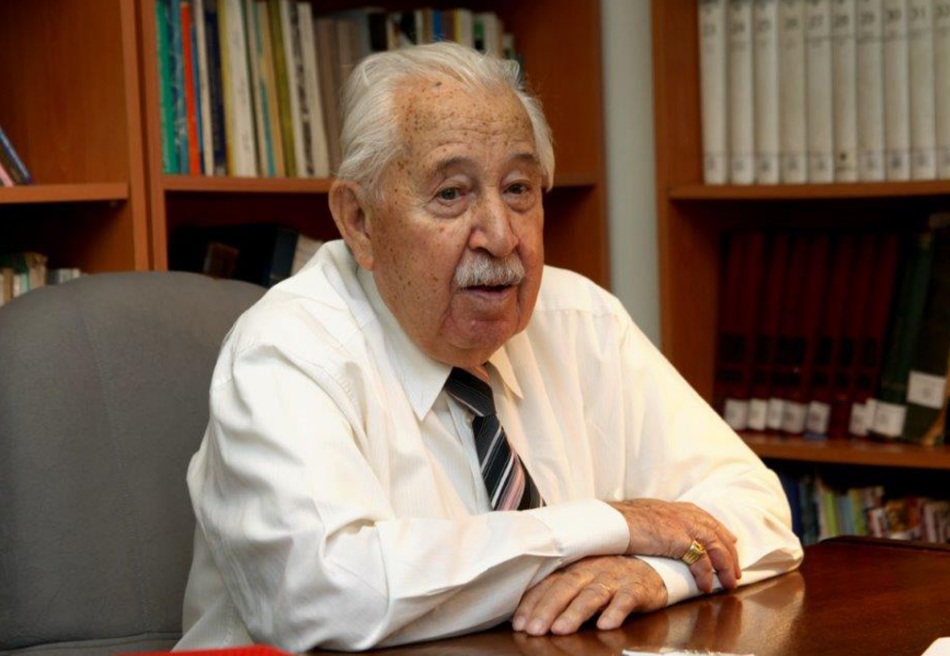
Prof. Dr. Semavi Eyice, 1922-2018
Does the story of the tughra end here? Of course not! The tughra continued to be haunted by a series of strange events. Once again it is Semavi Eyice who offers us insight into what happened: “For a few years, I didn’t visit Hagia Sophia. A woman named Jale was appointed director there (2005-2007). She contacted me, saying that she wanted to consult me on a number of matters. Well, I went along there and couldn’t see the tughra. It had vanished. ‘Where’s the tughra?’ I asked. ‘Jale Hanım, there should be a tughra here. It used to be nailed up on the wall.’ ‘Believe me,’ she said, ‘I have no idea!’ It had been removed and was nowhere to be seen. We looked for it and found it in a depot.
Once again, it was retrieved and brought to be displayed. This time, though, Jale Hanım had cold feet about mounting the tughra in its place. Instead, she commissioned the preparation of a glass cabinet, and the tughra was exhibited in it in a horizontal position. Well, then Jale moved on and once again the tughra vanished into thin air. The next thing I knew was that Haluk Dursun was appointed director of Hagia Sophia. I told him the same story, and he asked me where the tughra had been. I told him, and he had it put up in the original location (2). He said that he was going to publish a yearbook, and he included my article about the tughra as the very first item. The cover was that colour photograph… But then Haluk left Hagia Sophia too. That secret force, the force that removed ensigns and swords…” When he says “ensigns”, Semavi Eyice is referring to the Ottoman ensigns that we can see in old photographs, suspended on the pulpit of Hagia Sophia (3). As for “swords”, he is alluding to the fact that, in territories conquered by the Ottomans, the person delivering a sermon would yield a sword. When Hagia Sophia was transformed into a museum, like many objects, the ensigns and the sword were removed.
(Tuğranın hikâyesi burada bitiyor mu? Elbette, hayır! Gariplikler silsilesi tuğranın peşini hâlâ bırakmıyor. Yaşananlara yine Semavi Eyice’nin ağzından çıkan şu kelimelerle şahitlik ediyoruz: “Birkaç sene Ayasofya’ya uğramadım ben. Bir kadın oraya müdür oldu, Jale adında (2005-2007). Çağırdı beni, işte size danışacağım şeyler var filan. Gittim, bir baktım, tuğra yok. Kalkmış tuğra. Tuğra nerede? Jale Hanım dedim, burada bir tuğra olması lazım. Duvarda, çakılmış vaziyetteydi. ‘Valla benim haberim yok!’ dedi. Kaldırılmış, yok! Aradık, bir depoda bulundu.
Ondan sonra getirildi. Bu defa Jale Hanım cesaret edemedi yerine çaktırmaya, oraya bir camekan yaptırdı, onun içine yatırdı tuğrayı. Sonra Jale gitti, tuğra gene kayboldu ortalıktan. En son baktım, Haluk Dursun oraya müdür oldu. Aynı hikâyeyi ona anlattım. ‘Neredeydi?’ diye sordu. Eski yerini söyledim. Aynı yere çaktırmış (2). Ben bir Yıllık çıkarıyorum dedi. Benim yazıyı o yıllığın en başına koymuş. O renkli resmi de kapağa…Ama Haluk oradan ayrıldı. O gizli kuvvet, sancakları kaldırtan, kılıcı kaldırtan …” Semavi Eyice’nin burada bahsettiği Osmanlı sancakları eski fotoğraflarda Ayasofya’nın minberinde asılı halde görülebilir (3). Kılıçla kastedilen ise Osmanlı döneminde fethedilen yerlerde kılıçla hutbe okunması ile alakalıdır. Müzeleşme sürecinde birçok eser gibi Ayasofya’dan uzaklaştırılmışlardır.)
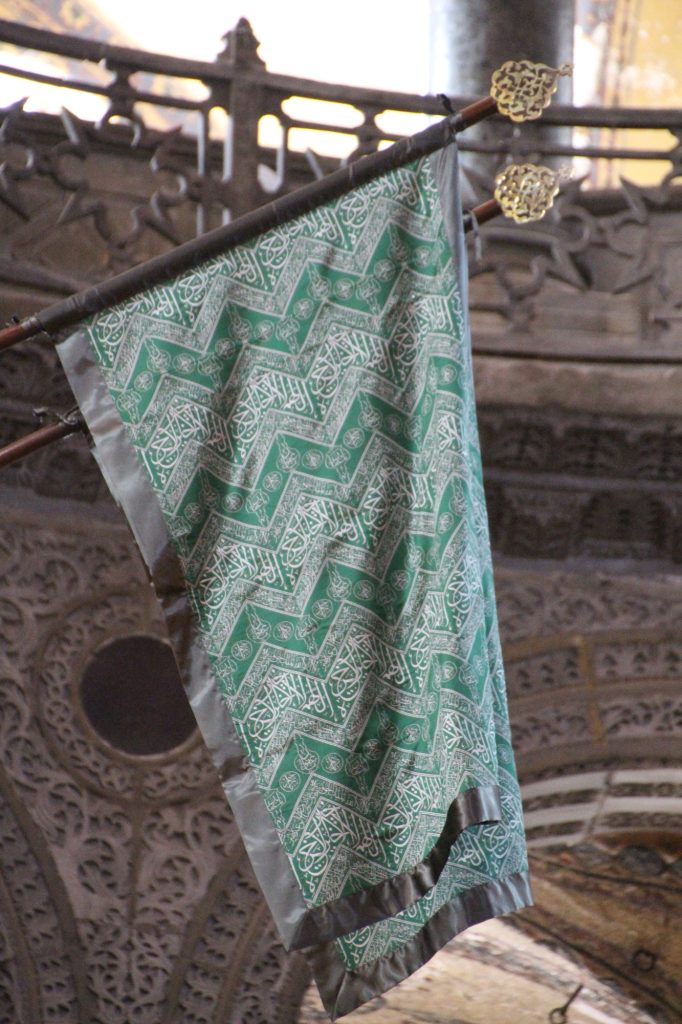
Ensigns, Hagia Sophia (Sancaklar, Ayasofya)
In the light of this anecdote, it is easy to appreciate the significance of Semavi Eyice’s response when he was asked “So have they removed it yet again?”, the response being “They might well do so. After all, we’re talking about the same power that was responsible for removing the pulpit at the Kariye Mosque .” This response must have been the fruit of certain experiences in the past. Let us hope that, in the future, museum administrators will not distinguish between historical artefacts and will perform their duties mindful of the fact that all these objects are a part of our history.
(Anlatılan bu anıdan sonra Semavi Eyice’ye tuğra ile alakalı yöneltilen “Yine mi kaldırttılar yoksa hocam?” sorusuna verilen “Kaldırtabilirler. Çünkü Kariye Camii’nin minberini de kaldırttı o kuvvet.” cevabı oldukça manidar. Bu cevap geçmişte yaşanan bazı tecrübelerin dışavurumu olsa gerek. Umarız bundan sonra gelecek yöneticiler tarihi eserler arasında bir ayrım yapmadan, hepsinin tarihimizin bir parçası olduğu bilinciyle görevlerini icra ederler.)
(1) In the mosaic decorations on the inner dome of the German Fountain we can see a mosaic tughra belonging to Sultan Abdülhamid II. This particular tughra, however, stems from quite a late period. What makes Sultan Abdülmecid’s tughra unique is that it was assembled from fragments from Hagia Sophia’s Eastern Roman phase. ( Alman Çeşmesi’nin kubbe içi mozaik süslemesinde Sultan II. Abdülhamid’e ait mozaik tuğra bulunur. Fakat bu tuğra çok geç bir dönemde yapılmıştır. Sultan Abdülmecid’in tuğrasını eşsiz kılan şey, yapımında Ayasofya’ya ait Doğu Roma dönemi mozaik parçalarının kullanılmasıdır.)
(2) According to Prof. Dr. Haluk Dursun, on 25 February, 2011 an investigation began to ensure that the tughra would be reinstalled in its old location, and on 4 April, 2011 it was indeed mounted in the place suggested by Prof. Semavi Eyice. (Prof. Dr. Haluk Dursun, tuğranın eski yerine asılması için gerekli incelemelerin 25 Şubat 2011 tarihinden itibaren başladığını, 4 Nisan 2011 tarihinde Prof. Dr. Semavi Eyice’nin gösterdiği eski yerine asıldığını söyler.)
(3) When Hagia Sophia was once more transformed into a mosque, the ensigns were reinstalled in their previous location on the pulpit. (Ayasofya tekrar camiye çevrilince sancaklar minberdeki yerine geri konulmuştur.)
Sources (Kaynaklar):
Ayvazoğlu, Beşir. Semavi Eyice ile Kadıköyü’nden Yüksek Kaldırım’a. Antik Çağdan XXI. Yüzyıla Büyük İstanbul Tarihi-Cilt: 10 (ed. Coşkun Yılmaz). İstanbul, 2015.
Derman, Uğur M. Tuğra. TDV İslam Ansiklopedisi-cilt 41. İstanbul, 2012.
Dursun, A. Haluk. Ayasofya Müzesi kültür envanteri. İstanbul Bilgi Üniversitesi. İstanbul, 2011.
Eyice/, Semavi. Ayasofya’da Abdülmecid’in mozaik tuğrası. Ayasofya Müzesi Yıllığı No: 13. Ayasofya Müzesi. İstanbul, 2010.


